- info@paraguayanharps.com |
- +595-21-623649 |
 |
|- Ver Carrito de Compras (2CHECKOUT)

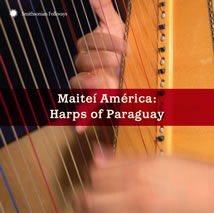
Por Alfredo Colmán Publicado por Smithsonian Folkways Recordings (Nota: Extraído del material impreso del CD "Maiteí América: Harps of Paraguay")
El arpa paraguaya es un emblema cultural que representa no solamente al Paraguay como nación y a su música tradicional, sino que también a los ideales que contribuyen a una noción colectiva de paraguayidad. El arpa se constituye en un aspecto fundamental del orgullo que los paraguayos sienten hacia el territorio nacional, la memoria histórica colectiva, la realidad bilingüe de los idiomas Guaraní y Español, los paisajes naturales, y el rico legado de las tradiciones folclóricas. Las melodías, las armonías, los ritmos, los textos de poesía, e inclusive los títulos de las canciones, en conjunción con el arpa, evocan en el oyente paraguayo nociones de identidad y de sentimientos de afecto por los valores y tradiciones que constituyen su paraguayidad.
Si bien el instrumento se encuentra arraigado a un pasado colonial, la identidad del arpa como referente de la cultura paraguaya a nivel local, regional, e internacional, se deriva de un conjunto de factores históricos y sociales desarrollados en el siglo veinte. Entre los más notables de éstos citamos: la exitosa carrera musical internacional del arpista paraguayo Félix Pérez Cardozo entre los 1930 y mediados de los 1940; la formación de conjuntos musicales paraguayos entre los 1940 y los 1980, grupos que realizaron presentaciones artísticas en Latinoamérica, Europa, Norte de Africa y Asia; la creación y promoción de festivales musicales en el Paraguay desde los 1960; la enseñanza sistemática del instrumento en conservatorios, escuelas y lecciones privadas; la promoción del arpa y de la música tradicional paraguaya a través de grabaciones y programas de radio y televisión; la enormemente favorable recepción internacional de la imagen, sonido y virtuosismo del instrumento. Todos estos acontecimientos contribuyeron al hacer el arpa paraguaya una de las tradiciones musicales más reconocidas e icónicas de Latinoamérica. Hoy día, cientos de arpistas profesionales paraguayos se presentan regularmente a través de Latinoamérica, Europa, Japón y otros países, y miles de ciudadanos del mundo cultivan a este instrumento y a su música. Los cinco arpistas que se presentan en esta grabación—Nicolás Caballero, Kike Pedersen, Martín Portillo, Marcelo Rojas y Miguel Ángel Valdez—representan varias generaciones de arpistas paraguayos que demuestran un arte arraigada en la tradición paraguaya y en el virtuosismo creativo.
Las arpas paraguayas de hoy en día son el resultado de la adaptación local de los instrumentos traídos de Europa por medio de los misioneros jesuitas durante los siglos XVII y XVIII. Las referencias más tempranas a la presencia del arpa en el Paraguay se remontan al siglo XVI. Así, Martín Niño, miembro de la tripulación del piloto y explorador Sebastián Gaboto, es mencionado como arpista (Cardozo Ocampo 1972:237) y en un relato del año 1590, Hernando Suárez de Mejía describe la subasta de un arpa en la región del Río de la Plata (Furlong 1945:131). El arpa diatónica (diatónica significa afinada a una simple escala no-cromática, como en el caso de las notas blancas del piano) y otros instrumentos europeos transplantados al Nuevo Mundo, estuvieron asociados al acompañamiento del canto litúrgico en las misiones jesuíticas, donde el arpa funcionaba como instrumento continuo (Ayestarán 1953:15; Nawrot 2000:45; Stevenson 1960:204), añadiendo las armonías que acompañaban a la melodía principal. Debido a que la música llegó a ser considerada una herramienta importante en la evangelización de los nativos, en 1618, cuatro músicos jesuitas europeos—Pietro Comentali (1591–1664) de Nápoles, Claude Royer (1582–1648) de Francia, Jean Vaisseau (1583–1623) de Tournai, y Louis Berger (1587–1639) de Bélgica—partieron al Nuevo Mundo en respuesta al llamado del Superior de la Provincia, quien había pedido la designación de maestros de música para las misiones. Más adelante, Anton Sepp von Reinegg (1655–1733), originario de Kaltern, en la región del Tirol, se unió al grupo de instructores de música. Entre sus multiples logros en el continente, el Padre Sepp estableció una escuela de música y un taller de instrumentos en el pueblo de Yapeyú (en la actualidad, la región noreste de Argentina), construyó el primer órgano a tubos en las misiones jesuíticas, y asimismo introdujo el arpa doppia europea en la región. Luego de la expulsión de los misioneros jesuitas en el tercer cuarto del siglo XVIII, algunos de los indígenas de las misiones conservaron sus oficios aprendidos y se concentraron en los pueblos que fueron parte del proyecto colonial de mestizaje biológico y cultural, el cual resultó en el habitante paraguayo de hoy. Mientras que algunos de estos indígenas guaraníes decidieron trabajar como artesanos, herreros, carpinteros, y luthiers en los asentamientos y pueblos coloniales, otros retornaron a su hábitat natural.
Además de Asunción, capital de la nación, la mayoría de los pueblos y ciudades en el Paraguay fueron establecidos en la Región Oriental, donde el suelo fértil promovió el desarrollo de la agricultura y la cría del ganado. Aunque algunas referencias en documentos de la época indican la presencia y uso del arpa en el Río de la Plata durante los siglos XVIII y XIX, muy poca información se ha registrado en cuanto a las actividades de los luthiers o a las técnicas de fabricación de arpas. No obstante, desde el último cuarto del siglo XIX, el cual fue marcado por el período de reconstrucción y restauración que siguió a la Guerra de la Triple Alianza (1865–1870), y a través de la mitad del siglo XX, la región del Guairá, ubicada en la parte central de la Región Oriental, ha producido un número significante de artistas, intelectuales, luthiers y músicos (Franco Preda 1972). Este ha sido el caso del intérprete y compositor Félix Pérez Cardozo (1908–1952), arpista paraguayo de notable reputación y propulsor del instrumento a nivel local y regional, y de Epifanio López (1912–2001), luthier quien estableció el primer taller de fabricación de arpas y guitarras del siglo XX en Asunción. Típicamente, los artesanos, compositores y músicos de la región adquirían y transmitían sus conocimientos y oficios por medio de la tradición oral.
El arpa paraguaya es un instrumento melódico, armónico y rítmico. Si bien su función principal ha sido proveer el fundamento armónico y rítmico a conjuntos musicales vocales, pasajes melódicos en terceras o sextas paralelas pueden así también adornar o interactuar con líneas melódicas vocales por medio de técnicas de imitación, yuxtaposición, o introducción de nuevo material melódico. No obstante, cuando el arpa paraguaya se presenta en carácter de instrumento solista, es frecuente que el instrumento sea acompañado por una o dos guitarras y, especialmente en sesiones de grabación, un bajo eléctrico. (Para esta grabación ha sido utilizado un contrabajo.) Este tipo de ensamble instrumental le permite al arpista ejercitar amplia libertad en la ejecución de pasajes de virtuosismo con ambas manos sin necesidad de proveer el necesario fundamento armónico o rítmico. En líneas generales, no existen guías rígidas de interpretación en relación a lo cual los arpistas pueden hacer o no al ejecutar el arpa. Parecería ser que en términos de técnica o estilo de ejecución, en la mayoría de los casos, los arpistas paraguayos demuestran creatividad e invención, a menudo observando y utilizando ideas de otros colegas.
La mayoría de los arpistas paraguayos ejecutan la melodía y el acompañamiento utilizando una combinación de las yemas y uñas de los dedos. Mientras que la mano derecha ejecuta pasajes melódicos, la mano izquierda generalmente la acompaña con acordes quebrados. Típicamente la mano derecha presenta la melodía en octavas y la armoniza agregando intervalos de tercera y sexta, o por medio de una combinación de terceras o sextas dentro de la octava. Ocasionalmente la mano derecha ejecuta acordes como puente entre frases melódicas o como acompañamiento cuando un cantante u otro instrumento participa de la pieza musical. Un aspecto único de la técnica utilizada por la mano derecha es el trino, trémulo o tremolo, el cual es ejecutado usando el movimiento constante de los dedos contra las cuerdas. En general, el tremolo es presentado en terceras paralelas, las cuales producen un sonido rápido y constante. Aunque generalmente la mano izquierda está encargada de apoyar a la melodía con el acompañamiento de acordes quebrados, en ciertos casos, el pulgar de esa mano vuelve rápidamente a las cuerdas, enfatizando la línea del bajo y produciendo un efecto de tipo staccato. Esta característica de la música paraguaya en el arpa es conocida como técnica de bordoneado, resultando en un tipo de bajo articulado y saliente en las bordonas y bordonillas (cuerdas del bajo). Con el fin de lograr este efecto particular, el pulgar permanece en forma paralela a los demás dedos y a la palma de la mano, la cual se adhiere a las cuerdas. Seguidamente, el pulgar se ubica entre las cuerdas mientras que los demás dedos funcionan como ancla por medio del contacto que éstos tienen con la mano. Al mismo tiempo que el pulgar “camina” en forma ascendente o descendente enfatizando la línea melódica del bajo, la palma de la mano se mueve en conjunción y acompaña el movimiento del pulgar. El resultado final es un efecto rítmico de sordina logrado por la palma de la mano luego de cada “toque” hecho por el pulgar. Otro efecto único en la interpretación del arpa paraguaya es el adorno o la decoración de la melodía por medio del uso de extensos glissandi, los cuales son frecuentemente introducidos sin necesidad de estar relacionados a la velocidad de la pieza musical. En muchos casos, particularmente en aquellos donde el intérprete encuentra pasajes con repeticiones de la melodía, el arpista puede optar por la ejecución de secciones enteras acentuando la línea melódica con glissandi. Algunas veces, glissandi ascendentes o descendentes de corta extension son usados para adornar un pasaje melódico, el cual puede también ser interpretado con la técnica de sordina.
El repertorio principal del arpa paraguaya está constituído por las polcas paraguayas y las guaranias, géneros dentro de las expresiones musicales del Paraguay. Al acompañar al canto, el arpista ejecuta patrones armónicos y rítmicos repetitivos, y ocasionalmente interactúa con las líneas vocales o instrumentales. Otros géneros musicales donde la combinación de arpa y guitarra cumplen un rol esencial son el compuesto, el rasguido doble, y el vals o valseado. Además de la polca y de la guarania, desde la década del 1940 los arpistas paraguayos han expandido su repertorio musical incluyendo canciones tradicionales de Latinoamérica y composiciones populares y clásicas de reconocimiento internacional. Este repertorio denominado “música internacional” incluye composiciones adaptadas a la capacidad técnica y al estilo convencional del arpa paraguaya. Esta grabación en particular se enfoca en dos de los géneros musicales más tradicionales, la polca y la guarania.
Caracterizada por su vivaz ritmo sesquiáltero en 6/8, la polca paraguaya es el género musical de canto y danza más conocido y cultivado en el Paraguay. Aunque su nombre deriva de la polka de Bohemia, la cual fue transplantada al Paraguay y al continente americano en la segunda mitad del siglo XIX, el género tradicional paraguayo denominado polca no corresponde a la danza de orígen europeo en cuanto a su estructura rítmica. Sus cortas frases melódicas son sincopadas y generalmente ligadas entre el último tiempo del compás y el primero del siguiente. Frecuentemente, la armonía es presentada en terceras o sextas paralelas siguiendo la secuencia I-V-I-IV-I-V-I que acompaña a la línea melódica. Enfatizando el constante y vivaz ritmo de la polca paraguaya, el típico acompañamiento de la guitarra y del arpa es presentado con acordes quebrados en el bajo y pulsaciones armónicas recurrentes en patrones de rasgueo (guitarra) o acordes arpegiados (arpa).
La guarania es un género musical urbano creado por el compositor José Asunción Flores (1904-1972). Si bien la guarania comparte características melódicas y armónicas con la polca paraguaya, su ritmo lento en 6/8 ofrece la posibilidad de presentar frases musicales de mayor extensión, así como también variaciones en la acentuación melódica y en el uso de síncopa. Originalmente concebida como un género instrumental, la guarania rápidamente se transformó en un género vocal. A través de la década de los 1940 y 1950, otros géneros y estilos musicales latinoamericanos como son el bolero y la bossa-nova, influenciaron el lenguaje armónico y la práctica de interpretación vocal de la guarania. Hoy en día el arpa diatónica paraguaya es el instrumento musical por excelencia en el acompañamiento e interpretación solista de guaranias. Su capacidad melódica y armónica le otorga amplias posibilidades en la ejecución delicada de la melodía mientras que acompaña a un solista vocal, presenta el tema principal de un pasaje musical, o improvisa durante una introducción o interludio. A partir del arreglo para arpa paraguaya de “India” por el arpista Luis Bordón para su disco Harpa Paraguáia (1959), versiones instrumentales de guaranias interpretadas en el arpa como instrumento solista se oyen regularmente en recitales, festivales de música folclórica y en grabaciones locales e internacionales.
En términos generales, la música tradicional paraguaya comparte tres similitudes con otras tradiciones musicales encontradas en Latinoamérica: un predominante vocabulario armónico diatónico, el uso de frases melódicas de corta extensión, y la improvisación armónica en terceras y sextas paralelas. Una particularidad de la música paraguaya tradicional es el uso frecuente de síncopa en la melodía. Generalmente la síncopa es ubicada entre el último tiempo del compás y el primer tiempo del siguiente, creando así la sensación auditiva de que la melodía es continuamente presentada en forma anticipada. La mayoría de las composiciones musicales tradicionales utiliza el compás de 6/8 (binario con subdivisión ternaria) con características de hemiola o ritmo sesquiáltero. Este efecto rítmico resulta en una ambivalencia auditiva percibida por el oyente cuando el intérprete combina los compases de dos y tres tiempos simultáneamente. Otros efectos rítmicos encontrados en la música paraguaya tradicional incluyen el cambio rápido de acentuación entre los compases binario con subdivisión ternaria (6/8) o binario [con subdivisión binaria] (2/4) y ternario [con subdivisión binaria] (3/4), así como también el patrón que combina ocho tiempos (dos grupos de cuatro, designados cuatrillos) contra los seis tiempos del compás binario con subdivisión ternaria (6/8). En cuanto a forma o estructura, las composiciones tradicionales tienden a ser clasificadas como “canción”, con varias estrofas y un refrán. Por lo general, una corta introducción y/o una serie de interludios instrumentales puede acompañar a cada estrofa. Sin perjuicio al ritmo constante y enérgico de algunas canciones, en la tradición interpretativa de la “vieja guardia”, la mayoría de las composiciones frecuentemente concluían con un efecto de rallentando, en el cual el arpa y la guitarra enfatizaban la tónica de la pieza musical, ejecutando lentamente acordes quebrados ascendentes por tres o más octavas— práctica que arpistas contemporáneos han optado por reemplazar con una cadencia final rápida y enérgica, inspirada en el estilo del tango argentino.
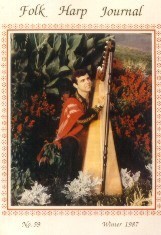
by: Carlos Raúl González Alborno
Por Carlos Raul Gonzáles Alborno
(Nota: Este artículo fue publicado en Folk Harp Journal No.59, página 27, invierno de l987) Utilizado con autorización de, Carlos Raúl González Alborno y Bernardo Garcete Saldivar, www.musicaparaguaya.org.py #23 "The Paraguayan Harp"
It is good to remember the great contribution made by Jesuit priests in the Parana Basin. Among those priests, I would like to mention in chronological orden, a priest from Belgium named Juan Vaseo, a music master teacher from Rudolph II´s court, who came to the Paraguayan missions in 1610 and remained here until his death in 1623.
I must mention father Antonio Sepp, a very cultured man, who taught Guarani indians how to play the citara, organ, flute, trumpet, guitar and the harp. Father Sepp built, in the Candelaria region, the first Paraguayan organ. In Yapeyú he built the First Paraguayan harps now known throughout the world as the best sounding harp. The handcrafting was done with local wood entirely, copying the models brought from Europe. Father Sepp was a German missionary born in Tirol in 1655, and after missioning for 41 years he died in San Juan, in 1733 (No wonder a century and a half later in the same city of San Juan, Agustín Barrios Mangoré, the best Paraguayan guitar composer/player, was born and started his marvelous career).
That was how everything started for us, Paraguayan harpists. Since then the harp became the national instrument in Paraguay. Of course, the models changed year after year until the first half of our century, when the Paraguayan harp got its particular shape and design. I understand that it is the only harp with strings coming out from the middle of the neck. Félix Pérez Cardozo is responsible for this invention and for adding two more strings to the harp, now with 36 strings normally. Abel Sánchez Jiménez raised it to 38 strings and added little "taquitos"(wooden rods) to make sharps by pressing strings against them. He also built double-strung harps of 74 strings with naturals at one side and sharp notes at the other. Some harpists use 43 strings. Other harpists use special devices to produce sharps. Nicolás Caballero plays sharps by pressing the string at the right place with the metal tuning key and with a metal ring for fast chromatic scales. To play Paraguayan harps requires unique and specific techniques.
Paraguayan harps are tuned five halftones higher than classical harps thus having red strings as F note and blue strings as B flat. (Sometimes C). There still is controversy on this issue, but I think we should go back to the international set with red Cs and blue Fs.
Nowadays, different models by many makers are sent all over the world and I must say that the Paraguayan harp is probably the most widely used internationally by players from all over the world. It has loud shiny sound used by many Paraguayan groups "conjuntos" touring the world. I can name a lot of them, but this is probably a matter for other articles. The truth is that not only Paraguayans play the Paraguayan harp. Kings, princesses, famous actors, etc. have started learning to play it. We now have many Japanese, French, Dutch and German harpists who play professionally. One American harpist using a Paraguayan harp is Miss America 1985, Sharlene Wells, a beautiful girl from Utah who studied paraguayan harp since childhood and played and sang live for millions of viewers at the Miss America Beauty Pageant, and won the contest. Paraguayans really scored by having such a wonderful woman play our national instrument. We were very proud and we gave her a great reception when she came to Asunción shortly after she became Miss America. Harpists, singers, famous composers, authorities, friends, etc., cheered her at her arrival.
That´s all for now. I hope I can send you more articles in the near future about the Paraguayan harp, harpists, music, typical groups, and everything related to us.
For now, SO LONG and ROHAIHU
El arpa paraguaya es considerado el instrumento nacional de Paraguay. Este instrumento posee características únicas que lo hacen un arpa excepcional.
El cabezal del arpa está diseñado de tal manera que las cuerdas salen del centro del mismo, eliminando la tendencia del cabezal a doblarse hacia la izquierda debido a la tensión de las cuerdas.
Como la columna y la caja acústica no necesitan ser extra fuertes para soportar la tensión de cuerdas que no están centradas en el cabezal, el peso de todo el instrumento es bastante menor comparado con el arpa irlandesa. El arpa paraguaya pesa alrededor de 6 kg. si no está equipada con llaves de semitono y 7 kg. con llaves de semitono.
En el arpa paraguaya la tensión de las cuerdas es relativamente baja, tiene los bajos de más alto volumen de todas las arpas actuales y los registros altos son muy brillantes. Contrario a la creencia popular, todos los tipos de música pueden ser ejecutados en este arpa, especialmente si tiene llaves de semitono.